Transgrancanaria Classic Race Report
An absolutely wild ride through the mountains of Gran Canaria “I’d never seen mud like it. Runners crawling on all fours, sliding backwards down 40% climbs, taking each other out

“I’d never seen mud like it. Runners crawling on all fours, sliding backwards down 40% climbs, taking each other out like helpless dominoes.”
I’m writing this 7 days removed from finishing the Transgrancanaria Classic 2026 – an over 125km (well, 130km) mountain trail race across the volcanic island of Gran Canaria from the North in Las Palmas to the Southern town of Maspalomas.
The DOMS are starting to subside and the wounds heal over, but the memories remain fresh so I want to get them all down now before they’re lost to the sands of time that is my brain.
I had a solid, albeit truncated, 8-week training block leading in, details of which I’ll dive into in more granular detail via a different article. I’d logged tens of thousands of metres of vertical gain and big volume weeks whilst maintaing trauning quality in the form of long tempos and threshold work. Strength training had remained really consistent and I’d dialled in my nutrition – Precision Fuel 90g gels for the win. Due to some ongoing shin pain, I hadn’t been able to focus on the specific hard downhill sessions required for a race of this elevation change so if there was going to be any issues, it would probably be my quads exploding a la UTMB 2024. I also had some concerns about the state of the trails and temperature changes on Gran Canaria. The weather seems to vary a lot and heavy rains turn the hard-packed dirt into a muddy slip n’ slide and various microclimates can push the temperature close to zero, especially higher up the mountain. Shoe and gear selection would be key so I brought my racing shoes and a more minimal pair of mud shoes just in case along with a range of warm layering systems.
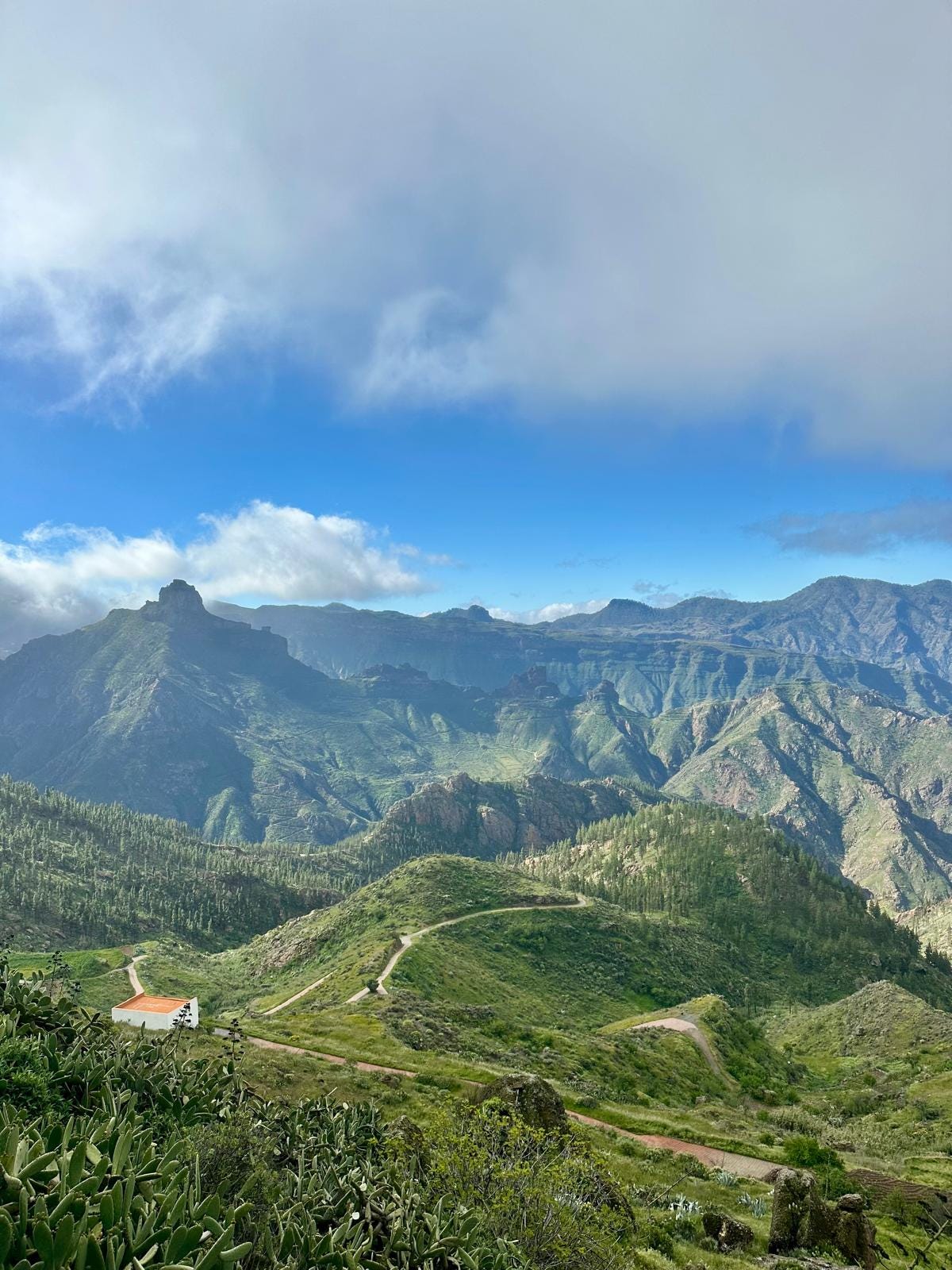
Upon arriving in Gran Canaria, I learned quickly, that it is very much two islands in one. The North is blanketed with lush green forests and farmland due to it being significantly wetter and cooler whilst the South was much more arid and desert-like. No joke, it rained every day in Las Palmas where we were staying but there would be glorious sunshine when we arrived in the towns around Maspalomas in the South only 45 minutes away. These two massively varied ecosystems on such a small island is crazy and would pose all kinds of challenges during the race. Especially as the island had experienced a huge amount of rainfall that Winter – so much so that landslides had forced route changes.
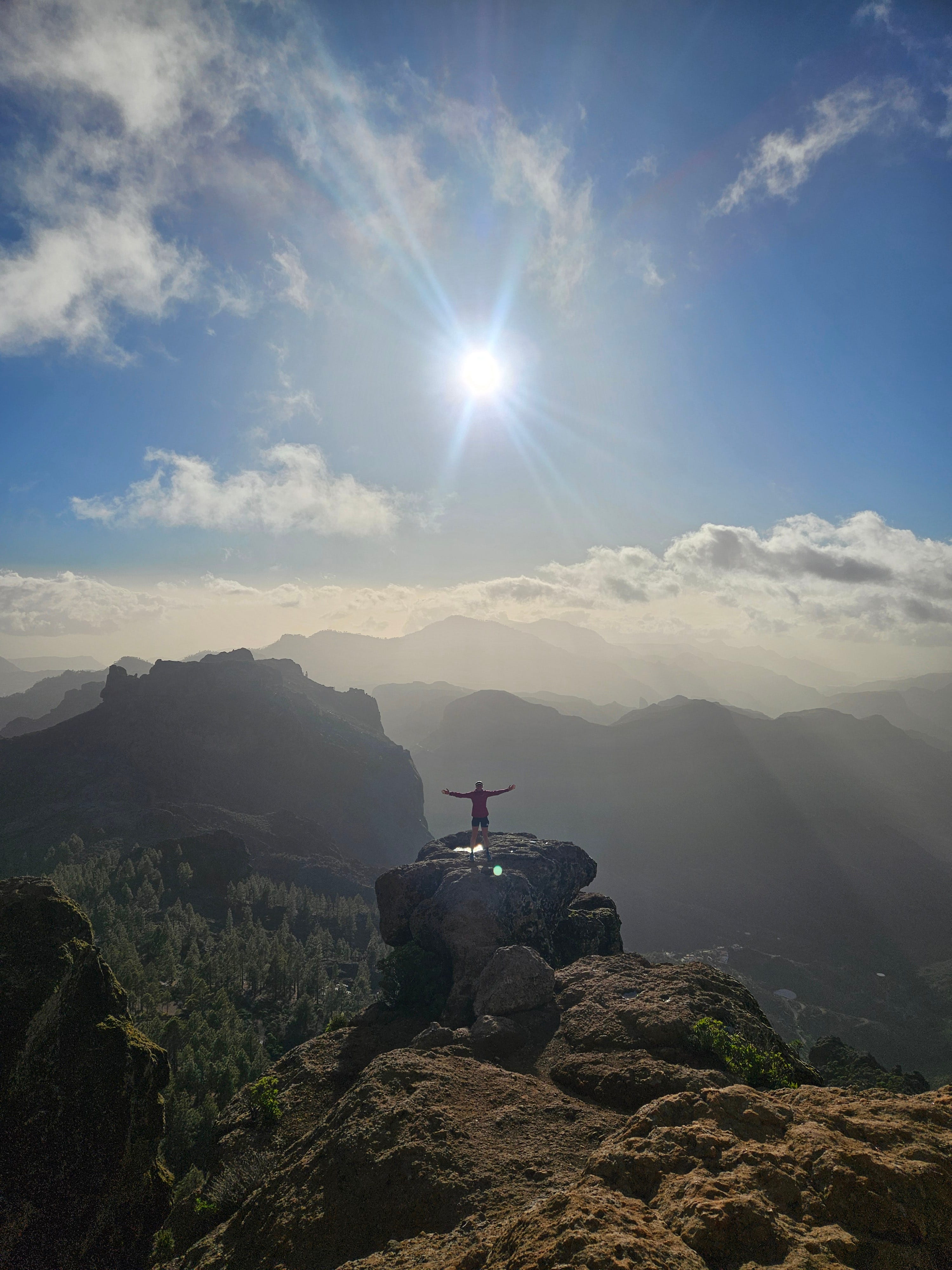
Absolute scenes from El Garranon/Rocque Nublo
Arriving a few days before the race allowed Liv and I to recce some of the TGC route and get a feel for the trails. I was also able to follow the livestream for the marathon-distance course on the Thursday and gain insight into what the last 42km of the course would look like underfoot. The general feeling was that it was going to be pretty wet and windy. My partner Liv was crewing for me so I would have the opportunity to re-supply much more frequently so I would only need to carry a third of my gels and electrolytes.
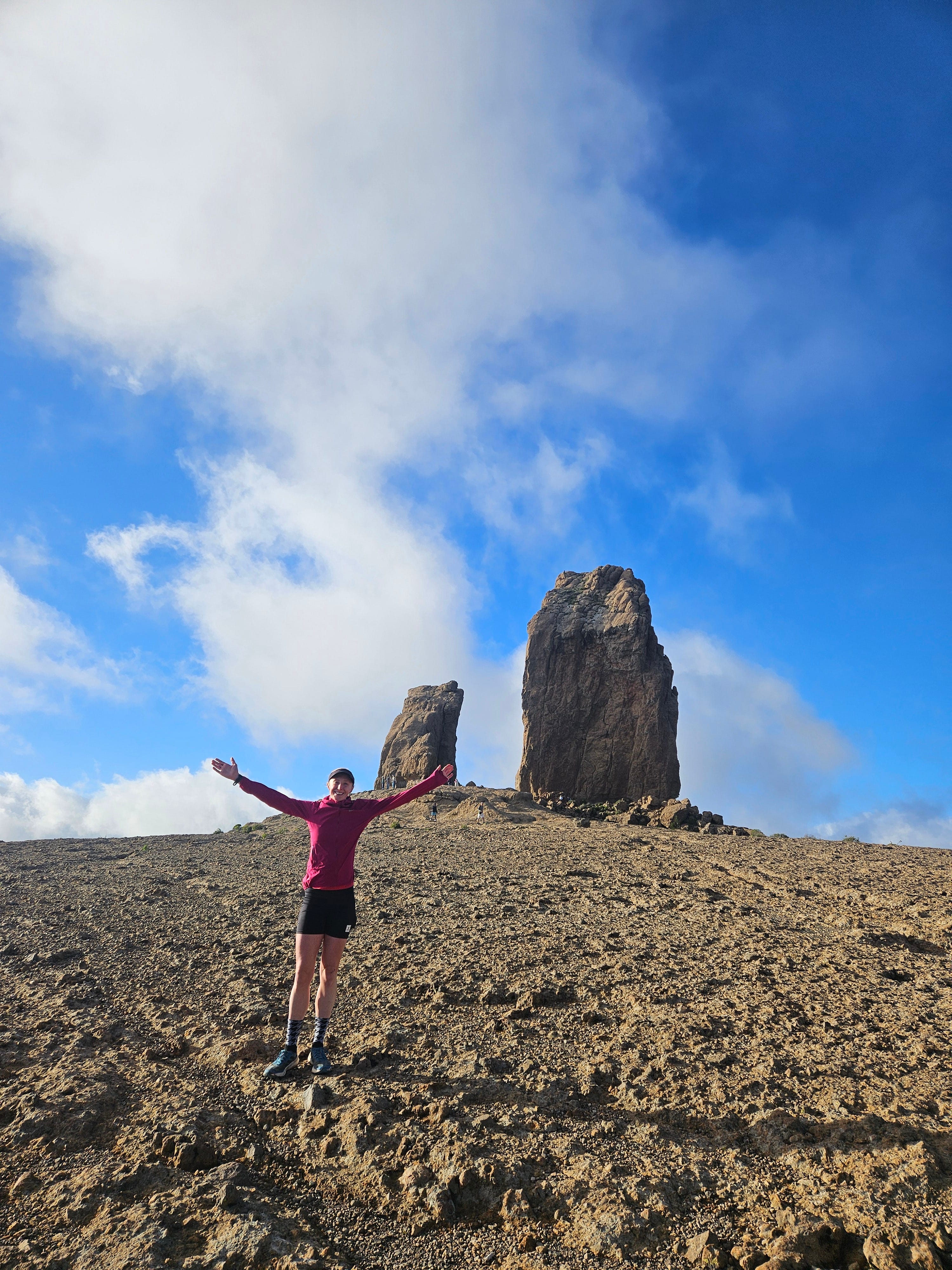
The infamous Rocque Nublo rock formation
My race was due to start at midnight on Friday (Saturday AM) on the beach about 20 minutes from where I was staying. I prioritised sleep the days leading in and managed a 90-minute nap on the Friday. In hindsight, trying to bank a little more sleep on the Friday would have served me well. About 2230 I banged two coffees and made my way down to Las Canteras beach where the race would begin. I was fortunate enough to start in the elite pen due to the nature of my gifted entry and after 15 minutes of waiting, Tom Evans and Jon Albon, two of the finest athletes in the sport of mountain ultra running, came a stood about 10ft in front of me which was absolutely awesome. I managed to keep most of my imposter syndrome at bay until the gun went off.
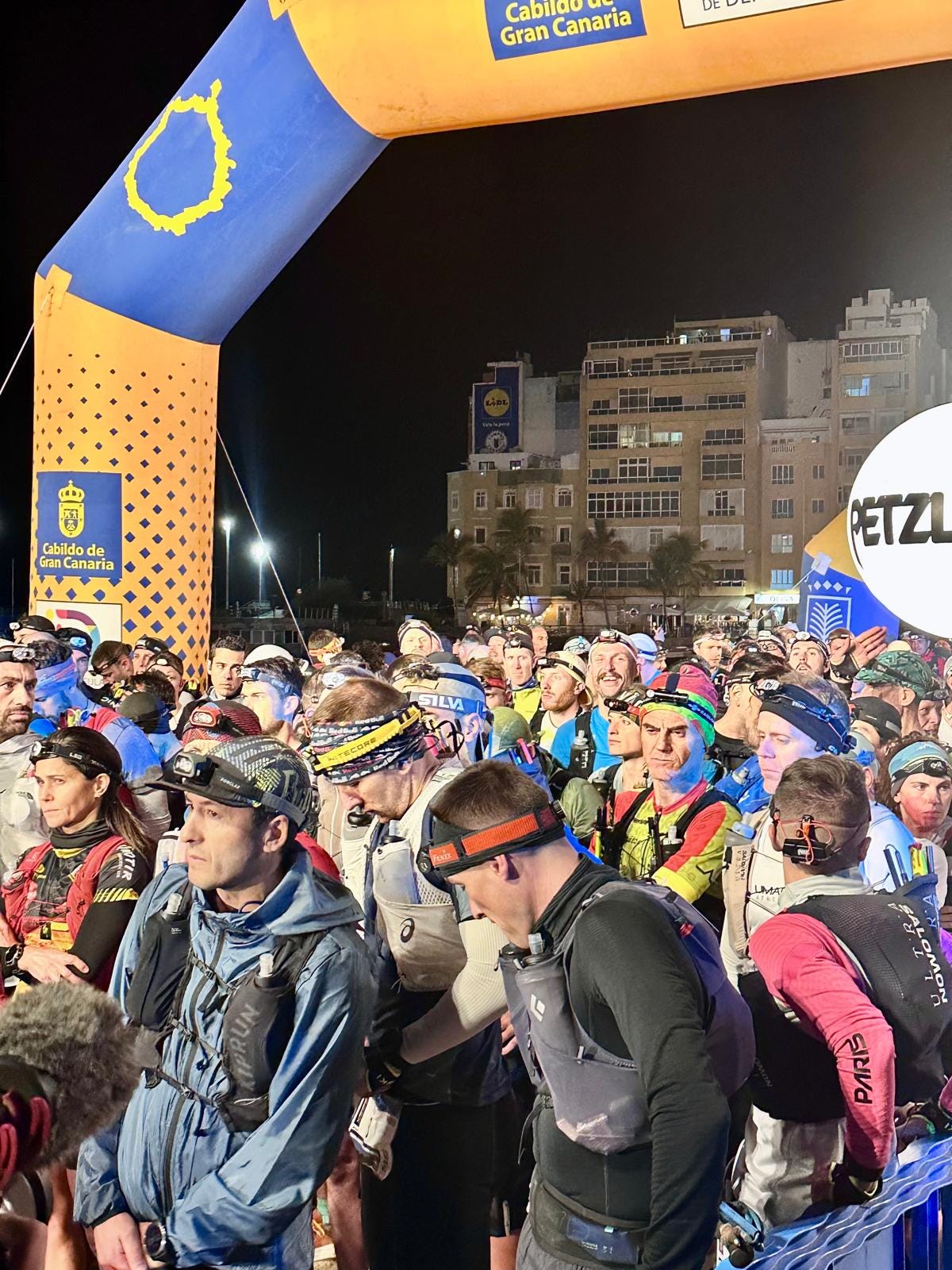
Tom Evans (white pack/white arm sleeves/yellow headtorch band) trying to blend in
The first 10 km to Tenoya were pretty quick, running along the beach and promenade with one longer but runnable climb. It was warm and dry so far and was glad to have not started in my rain jacket.
I was in and out of Tenoya aid station without needing anything and proceeded towards Arucas which was 20km in. It was at this point that both the climbing and the rain started and neither would cease until we reached the South about 12 hours later. I made sure to put my waterproof jacket on over my pack straight away to avoid getting my base layer and tee wet. I already had two pairs of gloves on but couldn’t find my waterproof overmitts whilst running so opted not to put them on. A decision I would pay for later.
The dry, rocky riverbeds we were supposed to be running through were in full flow with almost knee-high water. At first I tried to keep my shoes dry by skirting around the sides of the bank but ended up ripping my legs to shreds on the brambles so embraced the inevitable and ran straight through the waterway. As we hit the first climb, I quickly realised two things. That the grades were actually a lot steeper than I was expecting and the deluge had turned the volcanic ash soil, characteristic of Gran Canaria, into a giant wet clay slip n slide. It was absolute carnage. On one climb, which was about 35-40%, runners were on their hands on knees trying to grab hold of any foliage which might hold them to try and pull themselves up, only to slip out and slide 10m back down the hill taking out other competitors like they were pins in a bowling alley. People were covered head to toe in thick brown mud. There wasn’t a trail shoe on earth which could bear any traction. Only crampons would save you here. In the midst of it all I had to laugh. These were the worst underfoot conditions I had ever encountered. The mud was so thick that it would stick to the lugs on your shoe, adding a kilo or more to every stride, only to be shed by tactically running through a stream or stomping down on solid ground. Running downhill was especially challenging as the wet rocks and clay could cause you to slide out at any moment. It definitely slowed my descending and made me question both my shoe choices and life choices.
But we needed to keep moving. The rain, mud and climbing continued unabated as I made my way to Teror aid station at 32km. I was glad to see that I was still 40 minutes above my goal pace of 18 hours, though I had a feeling that if this weather continued the extra toll on my legs and smaller muscle groups along with the slower descents would start to eat into this buffer. I was still fuelling and hydrating well and was in and out of Teror quickly with only a water refill and toilet stop.
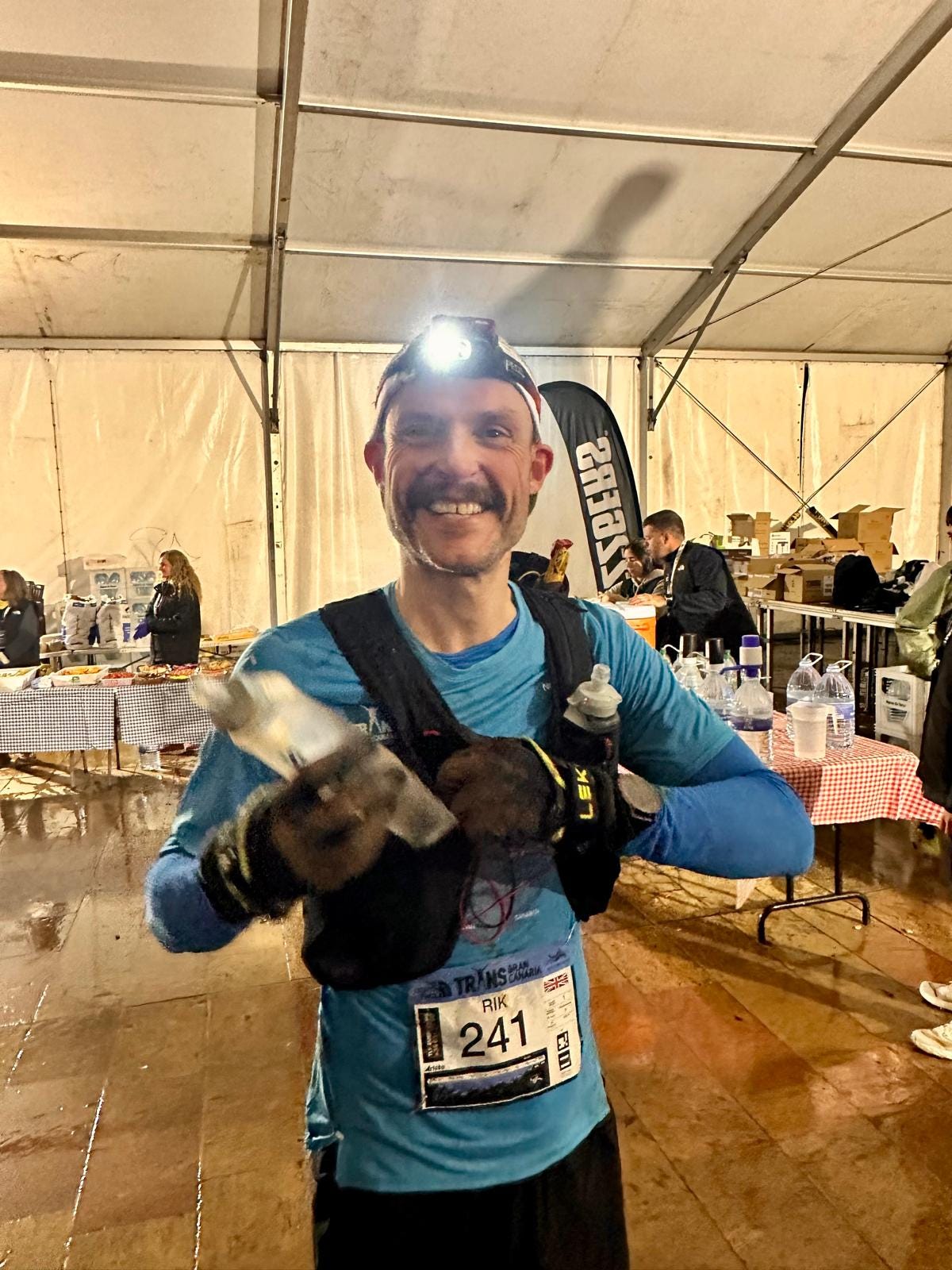
Still feeling pretty chipper early on (yes, this is what chipper looks like in ultras)
There was a 1000m of ascent heading up to Fontanales aid station and the runnable climbs I had trained for seemed few and far between. Instead I encountered very steep switchbacks requiring poles and a fast hike for the most part. The weather actually worsened during this part of the night too and on the ridge lines the heavy rain was combined with mist and strong winds, reducing visibility to a couple of metres. I did my best to try and keep at least one runner within view as the course markings, although excellent throughout, were hard to see and I didn’t fancy getting lost in these conditions in the woods.
My hands were soaked at this point and as I suffer from Reynard’s Syndrome, they were in absolute agony. If they went totally numb, I would be in trouble as I wouldn’t be able to use my fingers to open my gels unzip my jacket, etc. I should have taken the time to locate my waterproof overmitts earlier.
I made it to Fontanales aid station at 42km, used the toilet again (praise the lord that Liv was carrying emergency toilet paper) and re-stocked all my gels. Liv forced a load of salt down my neck and sent me on my way. There was no crew now until Tejeda in 37km so this would be a long solo stretch.
Heading toward El Hornillo the sky slowly started to lighten as sunrise approached which usually brings with it a renewed energy. This section had a beautiful descent through lush woodland with the trail dropping away 2000ft to the valley floor below. By the time I arrived in the remote aid station of El Hornillo at 54km the sky was much brighter but the sun was still blocked by thick clouds. A very helpful Spanish volunteer helped me put my waterproof overmitts on to try and warm my hands up before I pushed on.
The trail to the next aid station, Artenara (67km), involved another 1200m of climbing through the rocky, muddy mountain trails. My body was feeling pretty good up until this stage. I was still maintaining good calorie and fluid intake and was managing my layers and body temperature pretty well. I was still able to run everything apart from the longer, steeper ups too and maintained my position in the field pretty well. This was until the final, quad-punishing descent into Artenara. We dropped almost 500m straight down on a mix of rock, concrete and tarmac and by the time I arrived at the checkpoint my legs felt cooked and I could feel the start of my infamous side stitch which has haunted my races for the last few years. I was also feeling pretty tired, a combination of the midnight start messing up my circadian rhythm and the relentlessness of the course. Resisting the urge to sit down, Liv encouraged me to shovel down some pesto pasta, salted rice and electrolyte tabs before jog walking our way towards the exit. Liv informed me that race-favourite Tom Evans had dropped here due to the cold which was pretty shocking and was testament to how poor the conditions had been.
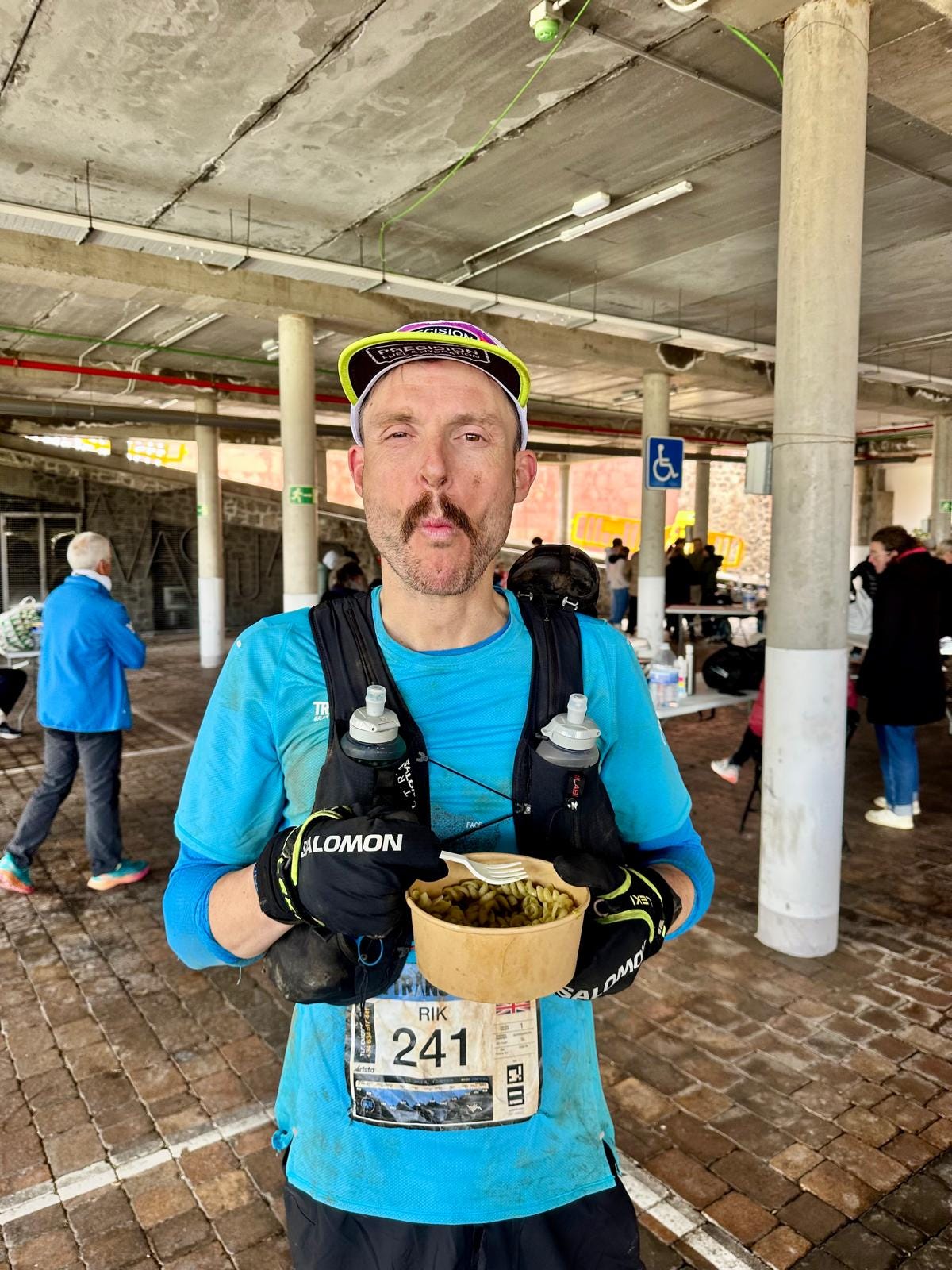
Nutrition choices not available during road races
I had another 1000m of climbing to look forward to but my spirits were lifted by the fact that I’d breached the halfway point so could start counting down the miles to the finish. I could also vaguely make out some blue sky and sunshine in the distance as we wound our way through the mountain passes. My main issue is that my carb intake was starting to diminish as my hands were occupied using my hiking poles most of the time. I estimated that I was still dripping in about 30-40g per hour, which wasn’t too bad, especially as I’d front loaded the calories well early on. I was still consistently managing the changes of temperature and bouts of rain by adding and removing layers consistently so not wasting too many calories shivering. I still couldn’t believe how changeable the terrain and weather was – it really kept you on your toes and rewarded those who looked after themselves. This section also reminded me of two golden rules of ultra running – you will always run and climb more than the race organisers state and the aid station will never, ever appear when you expect it to. This was leading to endless frustrated lamenting on my behalf.
Coming into the stunning mountain town of Tejeda, my legs and arms were feeling pretty cooked. A combination reduced calories, 80km of hard mountain running and relying heavily on my poles up the steep climbs. I was being cautious not to push the descents, knowing this was my weak point, but in braking on the downhill’s I was probably cause the same or more damage through my quads and hips than if I’d just let go and ripped it down. When I arrived, Liv warned me that one of the organisers had told her the next section up to El Garanon (known as the ‘Queen Climb’) would have no camera crew, due to the fact that the trails were narrow and more risky, involving exposed ridge lines with steep drop offs on either side. This was pretty triggering for me given my massive dislike of heights and I would spend the next 11km catastrophizing and wondering what it would feel like when I inevitably fell 5000ft to the valley floor. In the aid station I continued to take on electrolytes and started filling one of my bottles with the 226ers isotonic drink available in order to try and combat the side stitch which was still threatening to derail my race. Coming out of Tejeda, I was 60 minutes behind my splits for an 18 hour finish, which considering how bad the conditions had been thus far, I didn’t consider terrible. At this stage though, I was just looking to survive until the finish line.
The next section involved a seemingly endless 1700m climb up to Rocque Nublo, an iconic 90m tall rock formation which juts above the cloud line. The constant fear of falling to my death was a welcome distraction at this stage of the race. On a positive note, I was climbing well, managing to run the flats and gentler climbs and use my poles to power up the steeper sections. My side stitch had dissipated too which was a huge relief – electrolytes to the rescue once again.
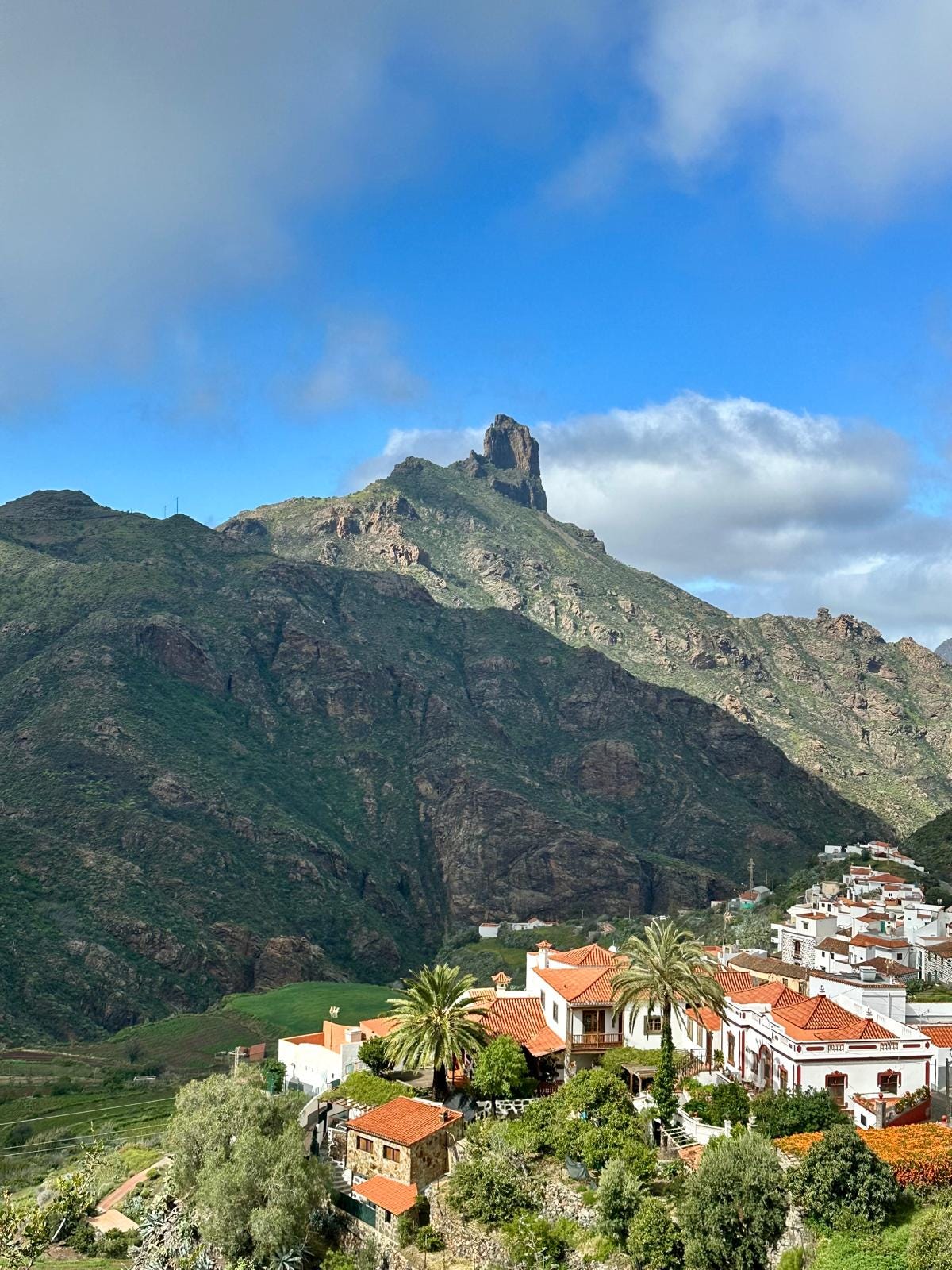
Rocque Nublo towering over the little mountain town of Tejeda
After tapping the scanner at the top of Rocque Nublo, I breathed a small sigh of relief in the knowledge that 6000m of the climbing had been completed and the majority of the remaining race was downhill. Though this would present it’s own problems.
The next aid station was El Garanon at 91km, which on my watch should have only been a kilometre from Rocque Nublo. I made the classic mistake again of expecting the aid station distances to match my watch (which they NEVER do) and the checkpoint was actually 5km away, which felt like an eternity. By the time I arrived, I was in 88th place and 14hrs 41mins deep, 80mins behind schedule. As Liv will attest, I was not feeling my usual chipper self. I trudged into the aid station, collected my last drop bag and slunk over to a quiet area for a little sit. This was the first time I’d sat down in almost 15 hours and it felt amazing. Most people at El Garanon looked pretty war-torn, which provided some small relief. I refilled my isotonic fluids, nailed a load more salt, caffeine and carb gels and slowly stood up using my poles for support. It was about 36km to the finish line and 2500m of steep and technical descent. This suddenly felt like a very long way.
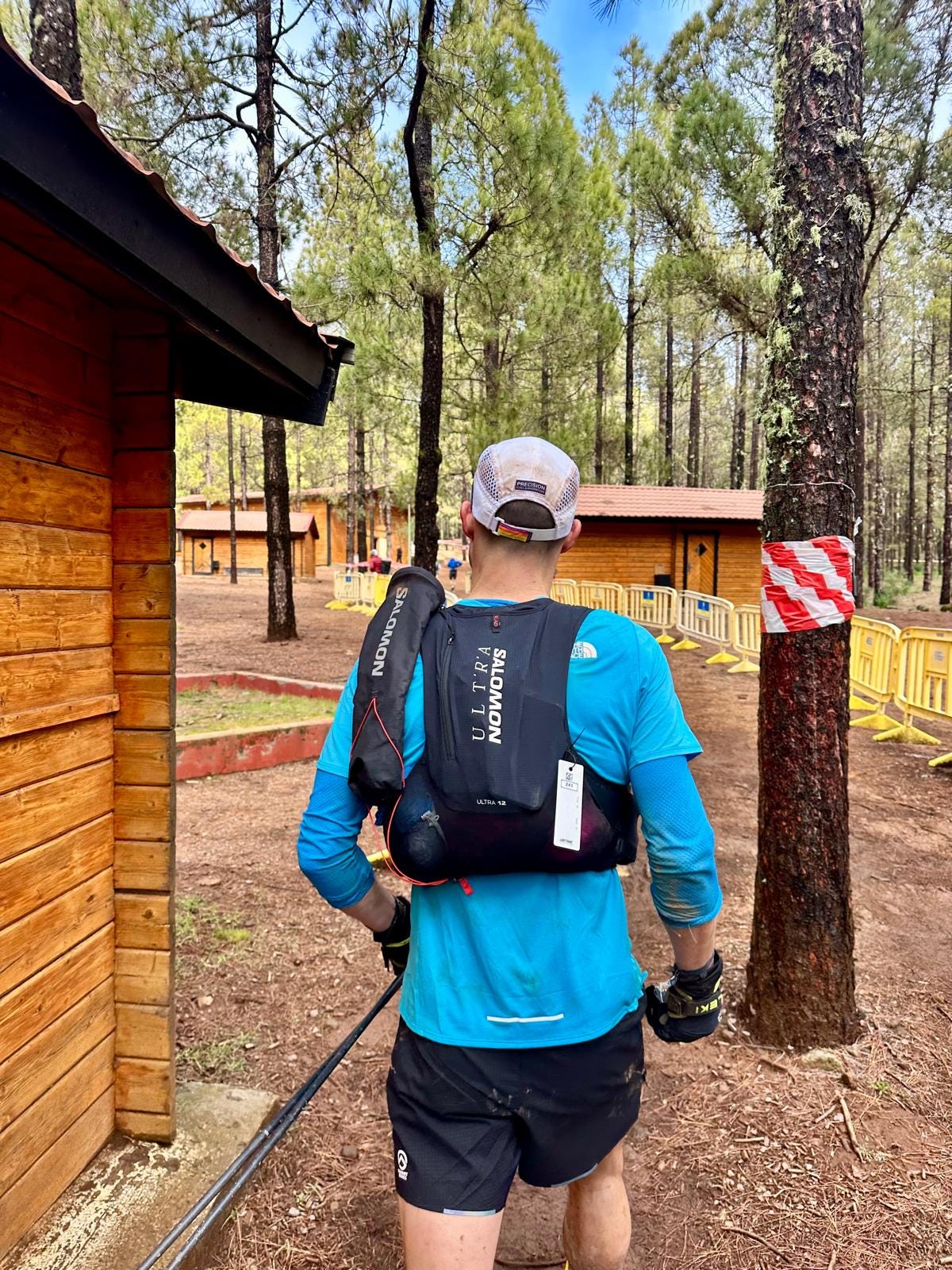
Walking out of El Garanon before the miracle occurred
No choice but to get out and start moving again. I’m not a lingerer at aid stations, much preferring to grab what I need and deal with everything else out on the course.
Now although I have experienced what happened next in a few races prior, this was to an unpreceded degree. As I started descending the first trail out of El Garanon, my legs suddenly felt totally renewed. Like I had only just started running. It is the ultra miracle we all pray for that is rarely delivered, at least not to this degree.
I would spend the next 4.5 hours trying to make sense of this blessed event, but in the meantime, I stashed my goals away and just started gunning it. I felt like I was absolutely flying. Cruising down switchbacks, leaping between boulders, gliding over rocks and screaming past fellow runners like they were walking. It was glorious. I was even able to run all the little rollers and longer, flatter sections with ease. The canyons and arid mountainsides on the south side of Gran Canaria opened up in front me of and I had panoramic views for miles in every direction, every feature dappled in sunshine. It honestly doesn’t get much better in trail running. It was almost ethereal, an out of body experience. Effortless.
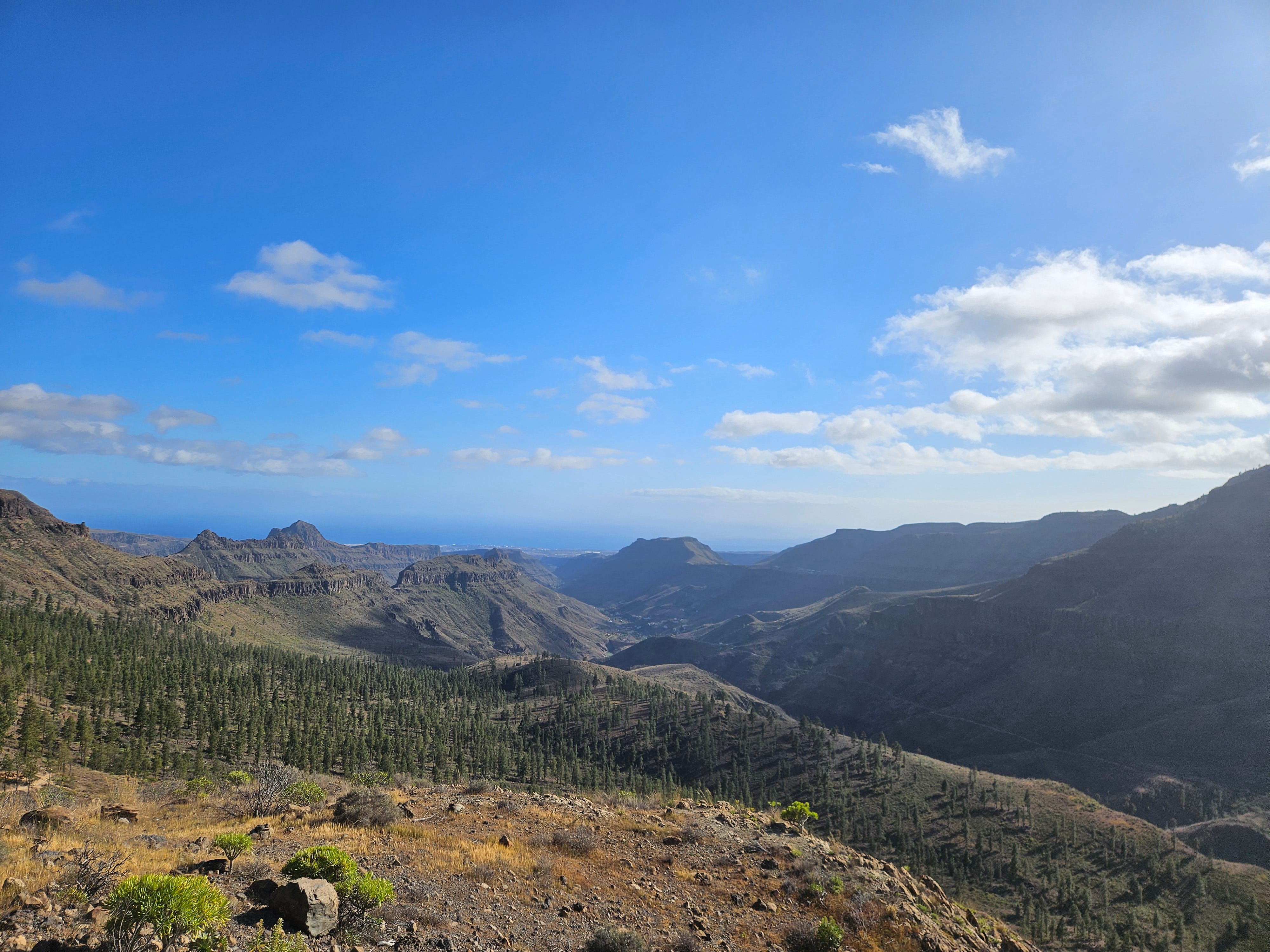
The descent into Ayagaures was just stunning
I glanced occasionally at my watch and could see that I’d gone from 80 minutes behind to 62 minutes behind goal pace in a relatively short space of time. I actually had a chance at making my 18:XX target at this rate! I tried to not get carried away, aware that this sensation can be fleeting and any moment I could be left walking and in a world of hurt. I made sure to keep hydrating and fuelling as best I could and just carried on gunning it down the mountain.
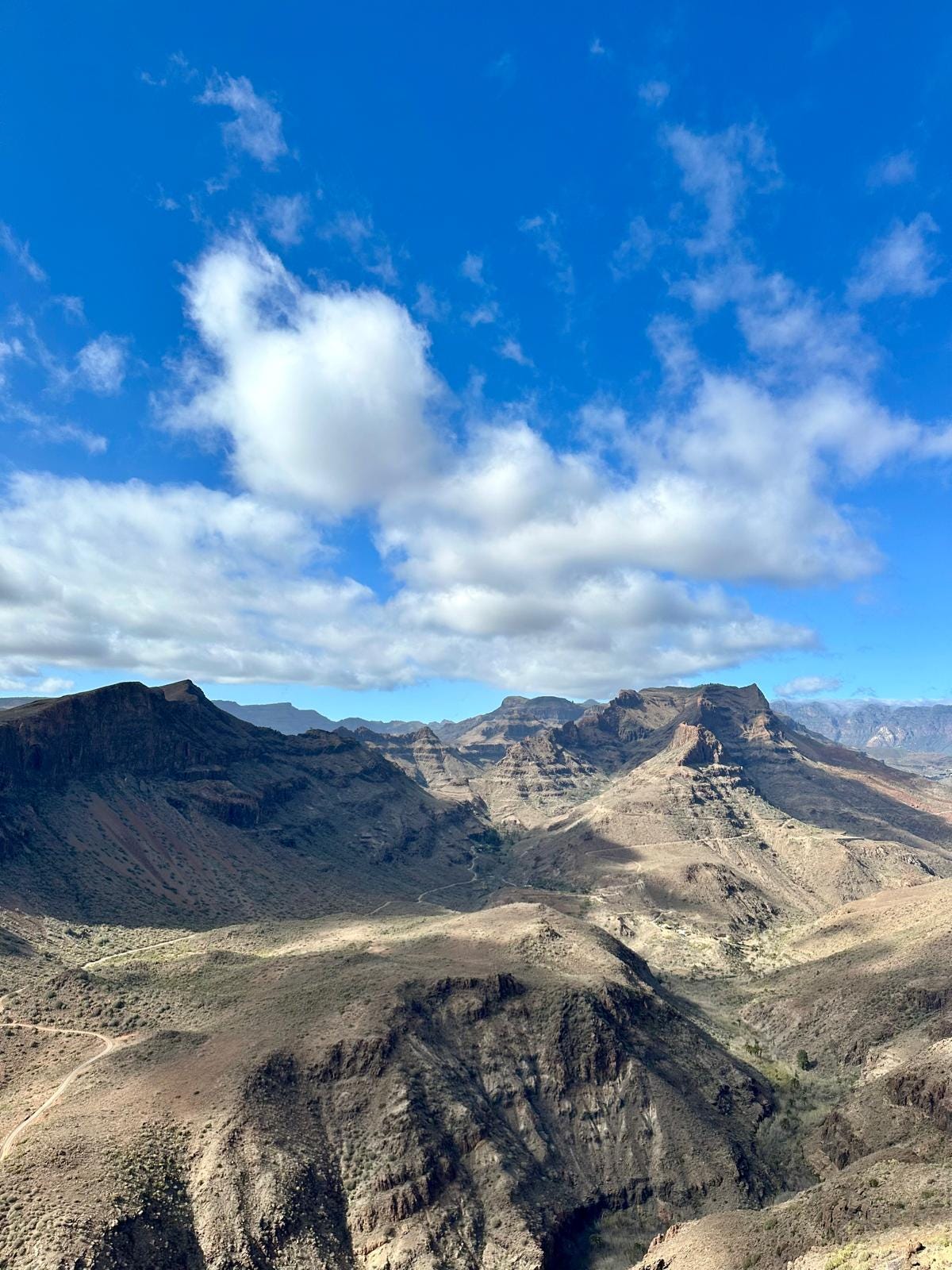
The South couldn’t look more different to the North
I rolled through Degollada del Diners aid station (100km) without stopping and proceeded to Ayagaures (113km). I was still feeling somewhat decent so stopped here only for more isotonic solution before heading off for the final 17km to the finish in Maspalomas. An aid station volunteer warned me as I was heading out that there was some very technical sections coming up and to watch my footing here – I assumed he was referring to the dried out riverbed I’d on previous race livestreams.
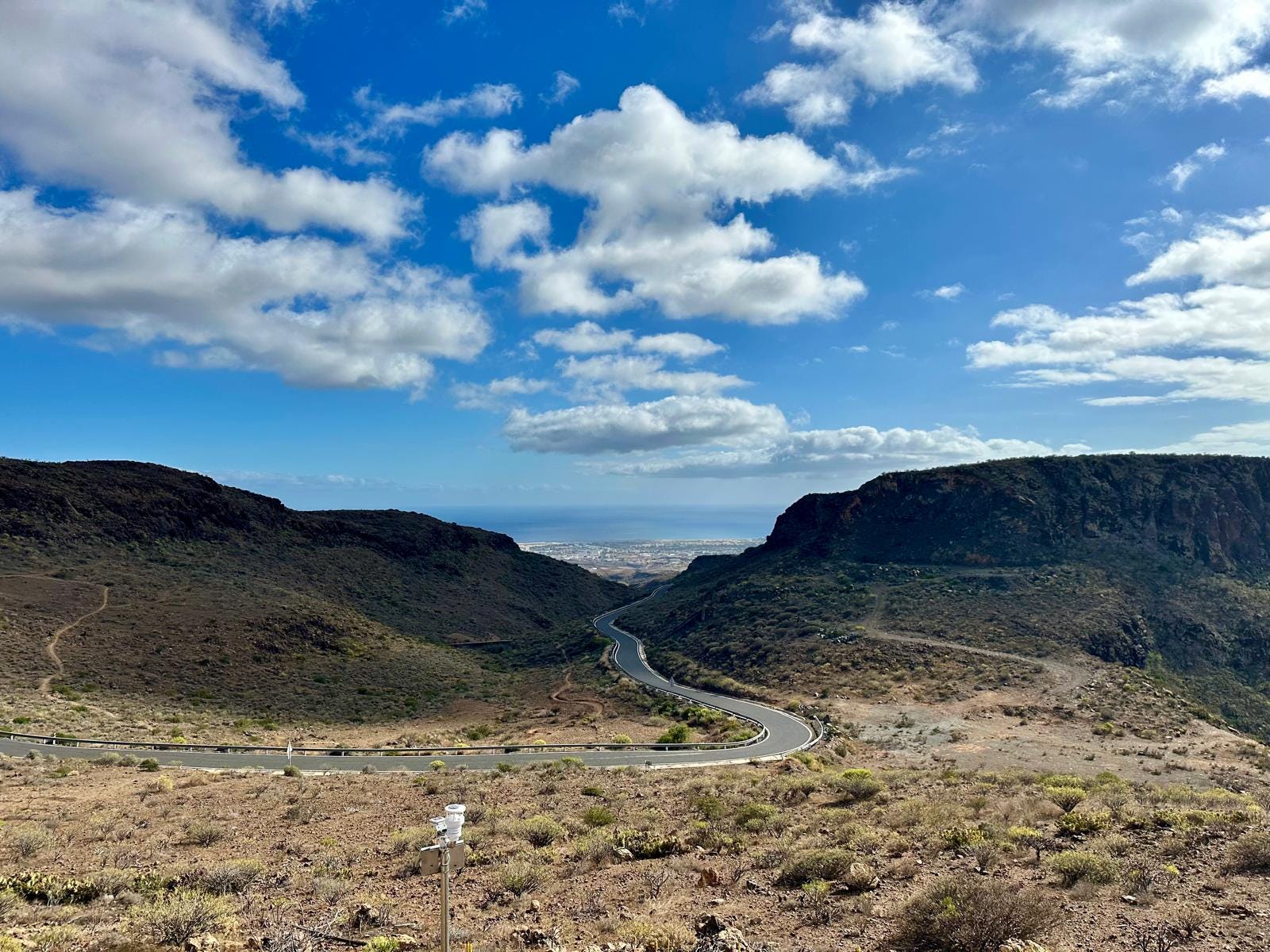
Masapalomas peaking out of the canyon in the distance
The next section was the last climb, a long, winding gradual ascent for a few hundred metres round the side of the valley. I chose to hike most of it to try and preserve whatever energy levels I had left for the last section which I knew would be challenging. The sun was also beating down at this stage and we were really exposed on the South side of the island where the terrain closely resembles that of the Grand Canyon.
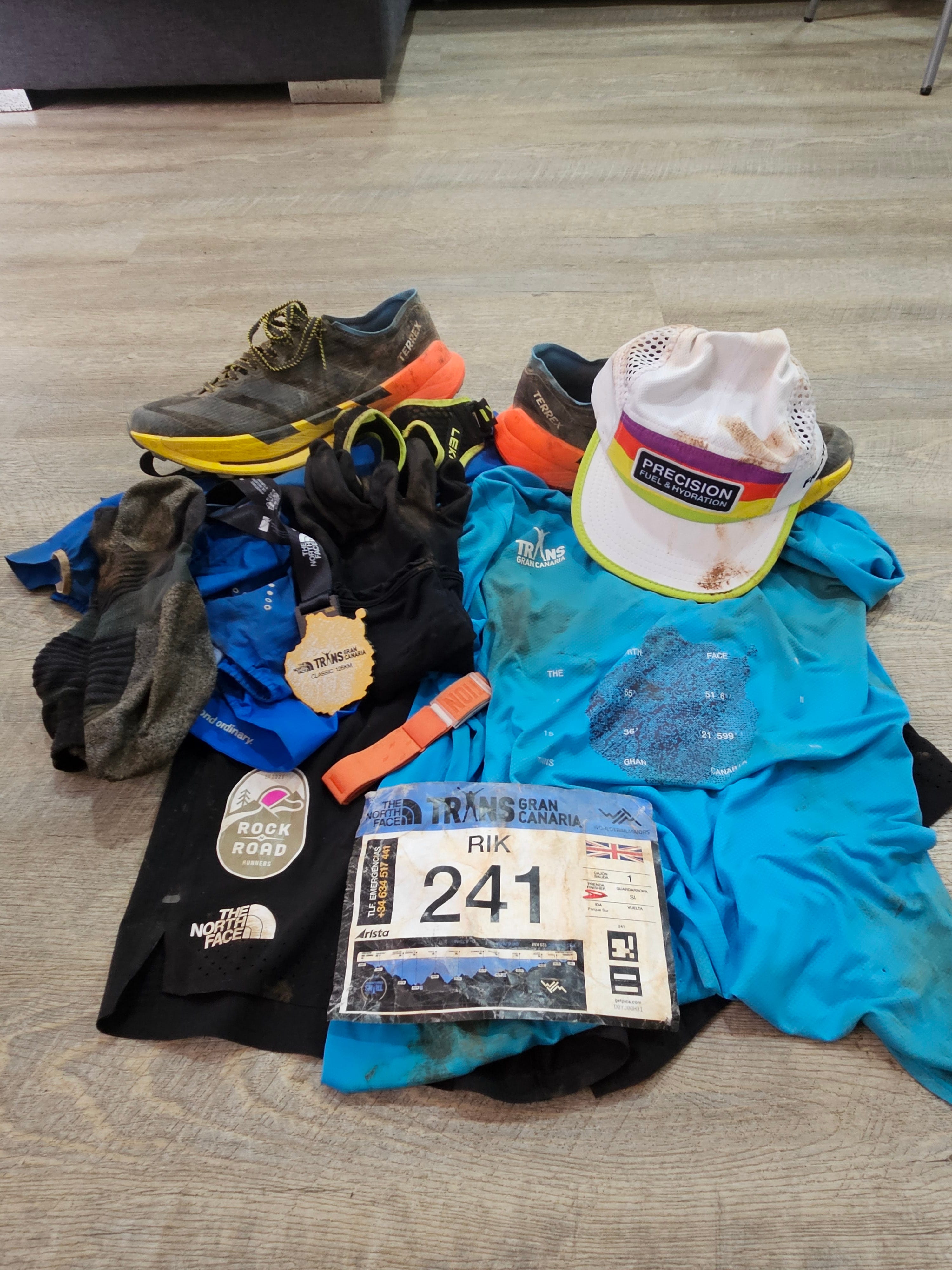
After cresting the hill is was all downhill to the finish. I still had legs to run the descent fairly well and was still managing to pass fellow competitors. I hit the boulder-strewn riverbed fairly quickly and really enjoyed leaping from rock to rock. My shoe choice, the Terrex Agravic Speed Ultra 2, had really come into it’s own on these drier, more compact trails, and I was able to utilise the Lightsrike Pro super foam to bounce and glide along the course. I was following the line of one of the 82km runners ahead of me and we ran together in unison until the end of the boulder field.
I was now running along the valley floor, winding along the trail on the way to the town of Maspalomas. I was 60 minutes behind goal pace based off my PacePro feature on my watch and doing some quick trail maths, I figured I should be able to run under 19 hours if I maintained my current pace. I had around 5km left to go based off my Garmin readings, but I knew that it was likely slightly longer in real-time.
Two more kilometres passed and I still had no sight of the town at all, just another twist on the valley trail to reveal yet more trail. I was starting to become frustrated again. Surely I should be able to see the town by now? Maybe it was a lot further than my watch suggested and the canyons had really impacted the accuracy of my GPS readings. My legs were really starting to feel heavy now and with the knowledge that I probably wasn’t going to make sub 19, I switched to a walk-run. After another 2km the trail widened out as we reached the end of the valley and I could start to see buildings off in the distance. By the time I could see the motorway overpass, I knew it was about a mile to go so started picking up the pace. As soon as I’d cleared the motorway I was spat out onto the road outside football grounds and I could hear cowbells and cheering in the distance, so I just started sprinting (or what felt like sprinting at least).
The crowds started to thicken, the screams intensified and after a couple of sharp turns I could see the looming The North Face black logos and the blue carpet of the finish line chute. I absolutely blasted it for the last 200m and pegged it across the line in 19 hours 10 minutes with a massive grin on my face.
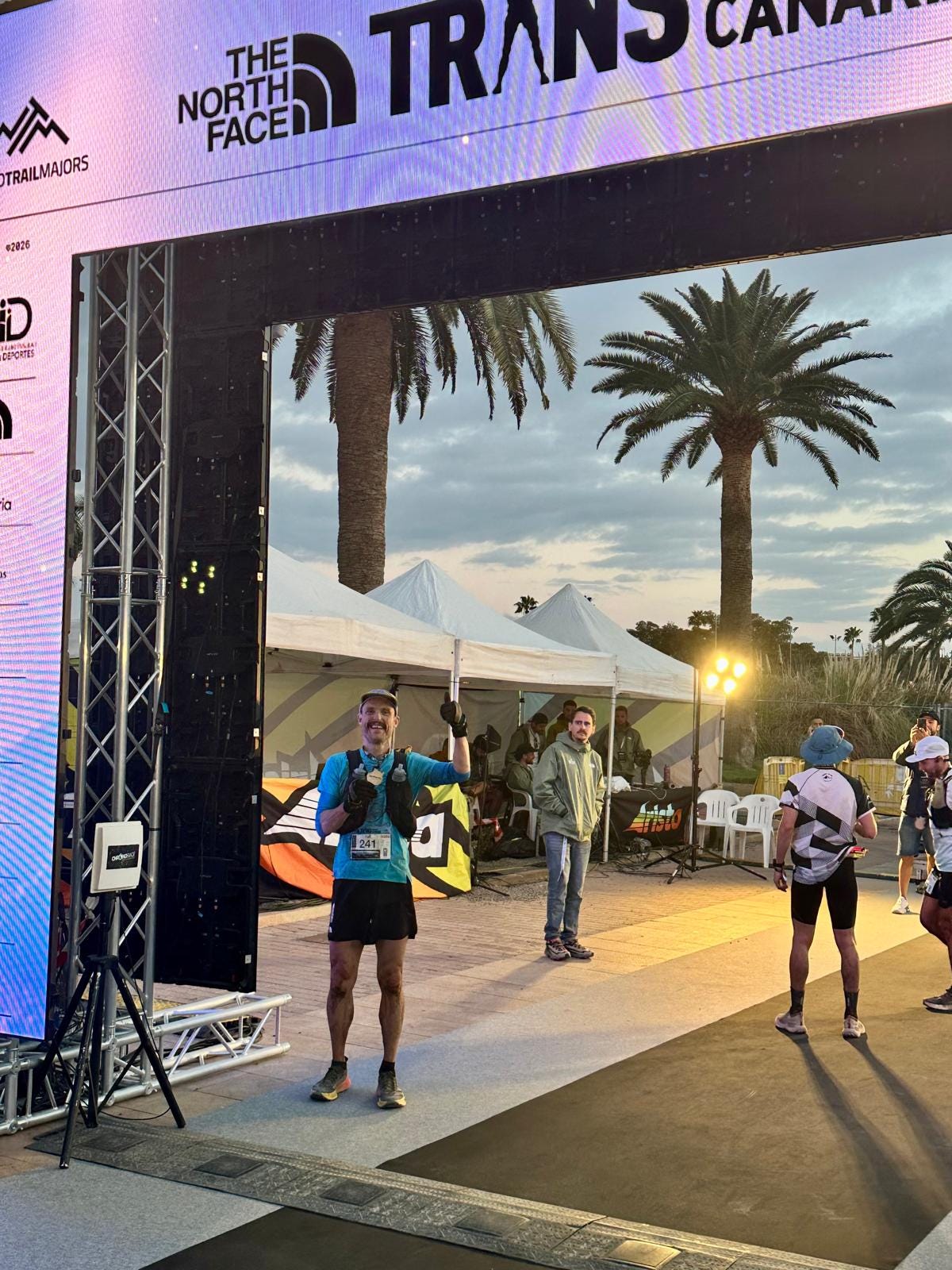
Not sure why I didn’t take a proper finish line photo
I’d not quite hit my goal time but considering the conditions and massive attrition rate (384 runners wouldn’t finish) of both elites and amateur athletes, I was pretty happy.
81st overall, 62nd by gender and 23rd in my age group.
After crossing the line, I staggered over to Liv for a huge hug before instantly seizing up and feeling like I was going to vomit. I quickly realised that my body was a mess of mud and blood and that I would probably have some of the worst DOMS of my life over the next few days (I would). But it was all 100% worth it.
I will likely write up a shorter piece on my training leading in and key takeaways from the race. So I’ll end it here.
All I’ll say is, if you’ve made it this far, you most likely have the endurance and mental toughness to enter one of the TGC race distances and you absolutely should. It’s a stunning course, really varied, challenging and all the local volunteers were incredible. The whole event embodied everything which is good and positive about the sport of both ultra and trail running. Thanks again to Liv for putting up with all this nonsense and her boundless support.
If you’d like to find out more or are interested in coaching, drop me a DM or visit me in the shop at Rock n Road.
Full Kit List
An absolutely wild ride through the mountains of Gran Canaria “I’d never seen mud like it. Runners crawling on all fours, sliding backwards down 40% climbs, taking each other out

Nick & Anna on Schoolhouse Ridge, Ballachulish Nick & Anna, in their constant pursuit of improving their outdoor knowledge, headed up to the excellent Glenmore Lodge near Aviemore, Scotland last